Hell Fire
Club
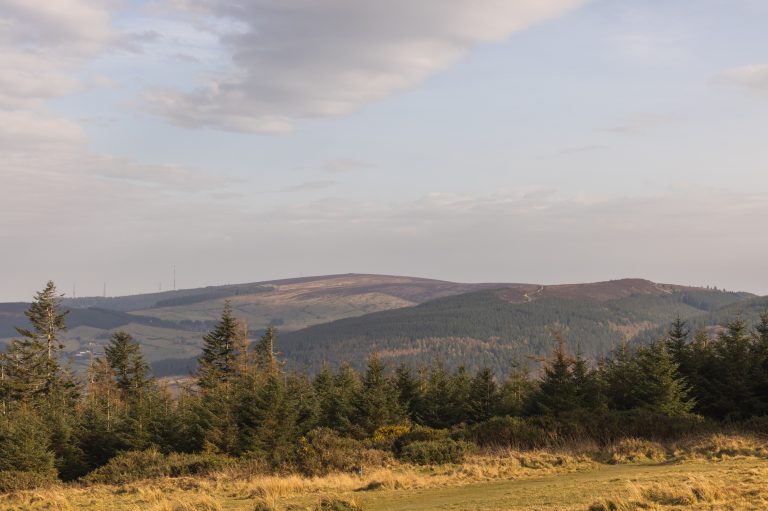
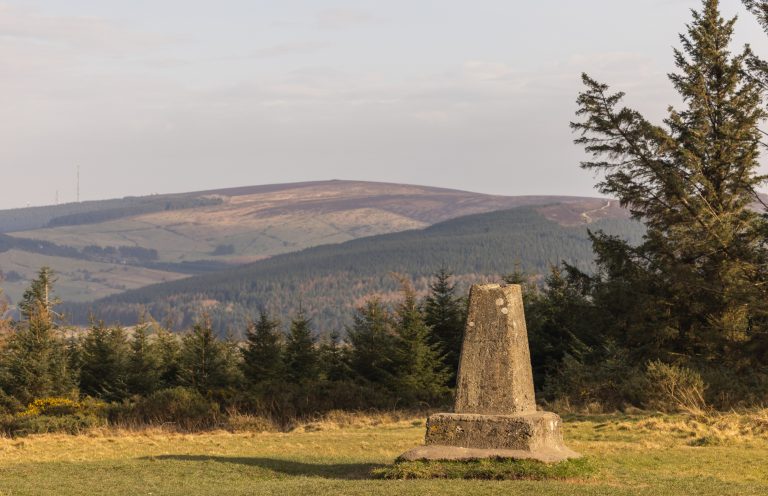
Discover the Hell Fire Club’s unique blend of history and scenery on Montpelier Hill. Walks through Coillte’s Hell Fire Club bring you to the iconic ruined lodge, a favourite backdrop for photos with Dublin City sprawling beneath. At 383m, the vantage point offers spectacular outlooks across Dublin Bay and the mountains. Plan your short hike today.
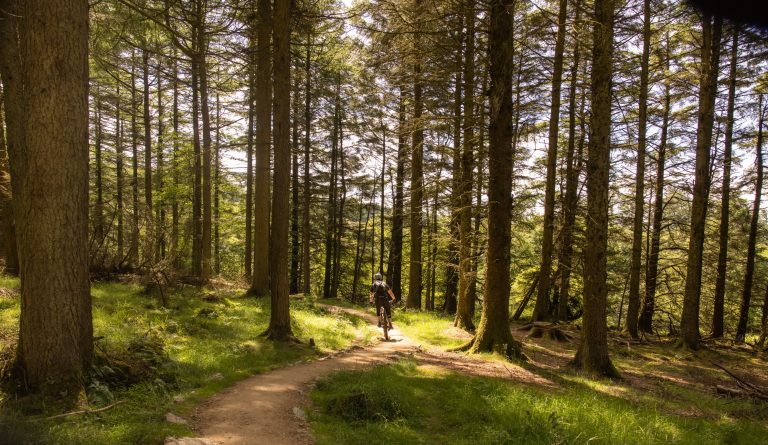
You’ll find 5.5 kilometres of forest roads and tracks to explore at the Hell Fire Club. Two waymarked trails help you navigate. The Forest Loop Trail (5.5km, green way markers) is a strenuous 1.5-hour circuit through the whole forest. The Montpelier Loop (4km, blue way markers) provides a moderate 1-hour walk directly to the Hell Fire Club ruin.
About the Hell Fire Club
-
Parking
-
Toilets
-
Bins
-
Cafe
-
Bus Stop
-
Picnic Area
-
Bike Hire
-
Dog Under Control
-
Mountain Biking
-
Orienteering
-
Equestrian
-
Zip Line
-
Archaeology
-
View Point
-
River/Stream
-
Dog on Lead
-
Bench
Hell Fire Club Legends and Lore
The deserted stone structure on Montpelier Hill has more than one history. One belongs to R.H. Connolly, Speaker of the Irish House of Parliament, who erected it as a shooting lodge around 1725.
Another belongs to the legends, with stories depicting this house as a site of occult activities. Brief appearances of the Devi even featuring in local tales. The building’s now-common name comes from its later occupants, namely, a club of “wild young gentlemen” who used a tavern near Dublin Castle as their meeting place. Their dismissal from the tavern for bad behaviour is said to have sent them to this remote location, leaving The Hell Fire Club’s name on the mountain for good.
Ongoing Discoveries
The Hell Fire Club’s known history is part of a much longer, richer story. In recent years, the Hell Fire Club Archaeological Project has worked to uncover that story. Excavations have revealed evidence of human activity stretching back 5,000 years. Megalithic art, a polished stone axe head, and a possible mushroom-headed pin were amongst the artefacts. Also unearthed were stone tools from the Neolithic period. More recent objects from the 18th and 19th centuries include a clay pipe, bottle fragments, and materials used in the construction of the hunting lodge. Each find adds a new layer to the hill’s long history.